The Tony Fry Collaboration
Professor Tony Fry is one of the most consequential design theorists working today — the originator of Sustainment Theory, Defuturing, and Redirective Practice (Fry, 2010; 2012). I worked with Prof. Fry as an editorial collaborator through The Studio at the Edge of the World, contributing to two main bodies of published work:
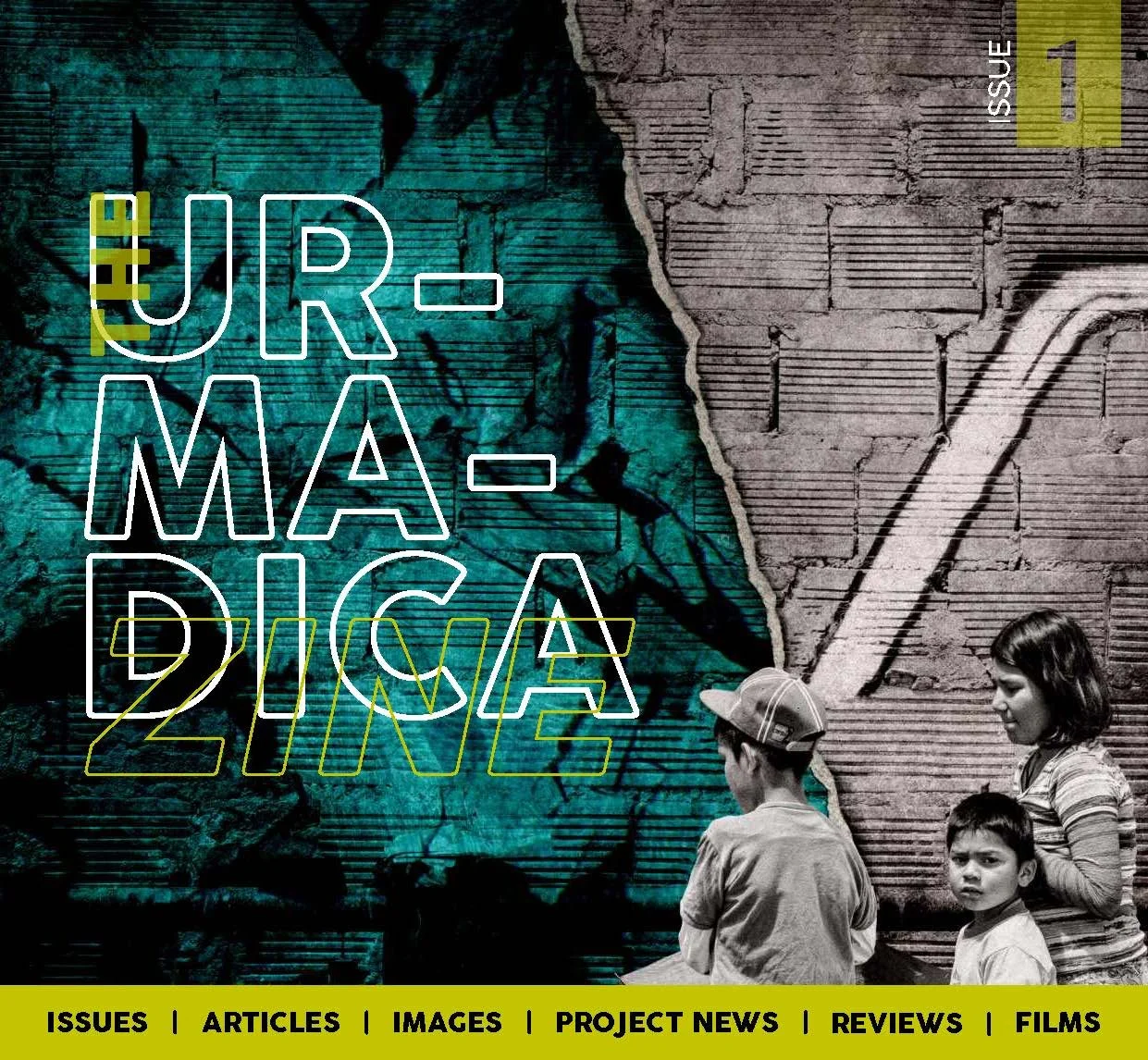
Urmadica (2021–2022) was a fast-burning, of-the-moment, and by its nature, short-lived publication of The Urmadic — a futural education project that operated without institutional affiliation or fixed geography. I served as editorial content collaborator on Issues 1–4, working across multilingual contributions, speculative essays, photo essays, and critical theory pieces. The role required me to understand each contribution on its own terms, maintain the intellectual coherence of the project as a whole, and make the work accessible beyond the immediate circle of contributors. This isn’t copyediting; it’s curatorial editorial judgement at a level of theoretical demand that most editors never encounter.
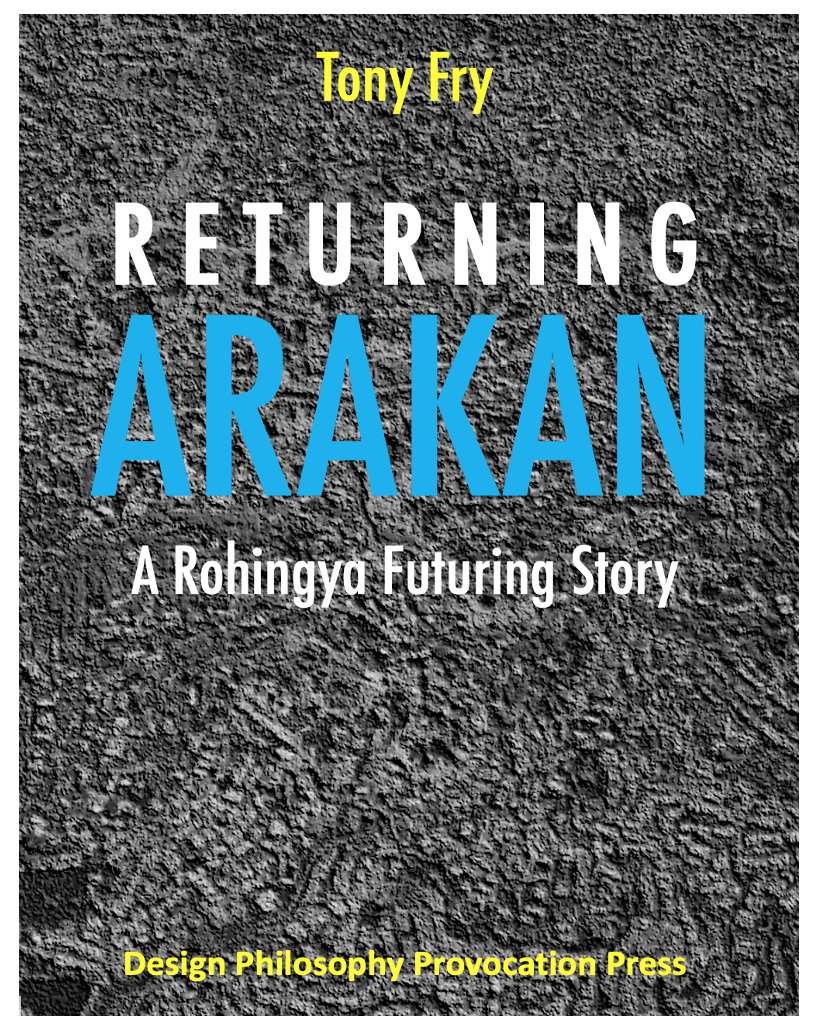
Returning Arakan is a manuscript written by Prof. Fry that uses speculative, futures-oriented narratives to render the consequences of current cultural, humanitarian, and political trajectories legible to practitioners, policymakers, and public audiences. I served as the primary editor on Returning Arakan (2021–2022). This work required ensuring that speculative scenarios were geopolitically plausible, that the theoretical frameworks were correctly applied, and that the language moved smoothly between intellectual precision and public accessibility.
For anyone considering me for roles in strategic foresight, research translation, or social impact design, this collaboration is the clearest signal that my theoretical grounding has been tested in practice to a high standard alongside one of the most demanding thinkers in the field.
Master of Design (Research), UTS
I completed a Master of Design (Research) at UTS under the supervision of Professor Abby Mellick Lopes and Dr Thomas Lee, supported by an Australian Government Research Training Program Scholarship. My thesis, submitted January 2026, investigates how professional knowledge communities sustain cohesion and belonging when their physical infrastructure is removed or disrupted.
That question sits at the centre of what many Melbourne organisations are working through right now. The research draws on longitudinal case study methodology, semi-structured interviews, reflexive thematic analysis, and digital ethnography, and its findings are organised around three questions that anyone managing community, events, or digital transformation will recognise:
Why do people disengage from official communication channels and seek informal alternatives?
What does it actually take to make a hybrid or distributed gathering feel coherent rather than fragmented?
How does institutional inertia undermine even well-resourced attempts at innovation?
These findings translate directly into practical recommendations for membership bodies, conference producers, government communication teams, and social impact organisations — not as theoretical abstractions, but as design interventions grounded in empirical evidence.
The theoretical toolkit underpinning the research also has direct professional application: diagnostic frameworks drawn from Peter Sloterdijk’s philosophy of spherology and co-habitation (understanding why some organisations retain loyalty under pressure while others fragment), from Daniel Miller and Mirca Madianou’s theory of polymedia and communicative choice (designing ecosystems where the right conversation happens in the right place), and from Lev Manovich’s work on augmented space (layering digital experience onto physical environments). These aren’t just academic exercises — they’re lenses I employ to work on real-world problems.