The Fry Collaboration: Urmadica, Returning Arakan, and What It Means for Melbourne
To understand the significance of my collaboration with Professor Tony Fry, it helps to understand what Professor Fry represents in the global design landscape. Fry is not a commentator on design. He is one of the discipline's most consequential philosophical architects: the originator of Sustainment Theory, the concept of Defuturing, and Redirective Practice, frameworks that have fundamentally reshaped how serious design thinkers approach the relationship between human practice and the long-term viability of life on Earth. His influence extends across design schools, policy institutions, and civic organisations globally. When I worked with him as an editorial collaborator, I was not processing manuscripts at arm's length. I was operating inside a living theoretical project, making decisions about language, accessibility, and public communication that required genuine comprehension of some of the most demanding ideas in contemporary design thought.
Urmadica: Futural Education at the Edge of the Possible
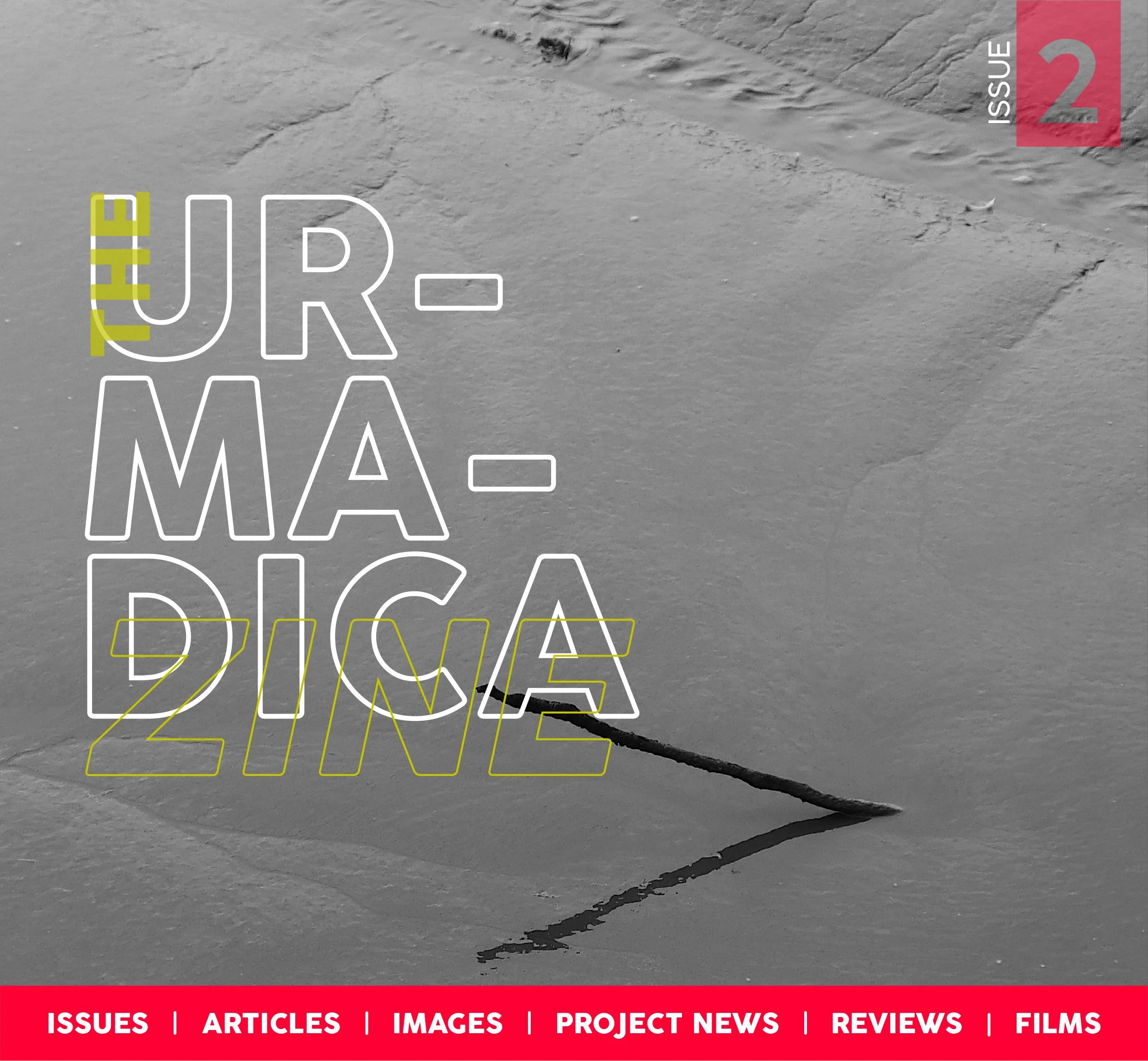
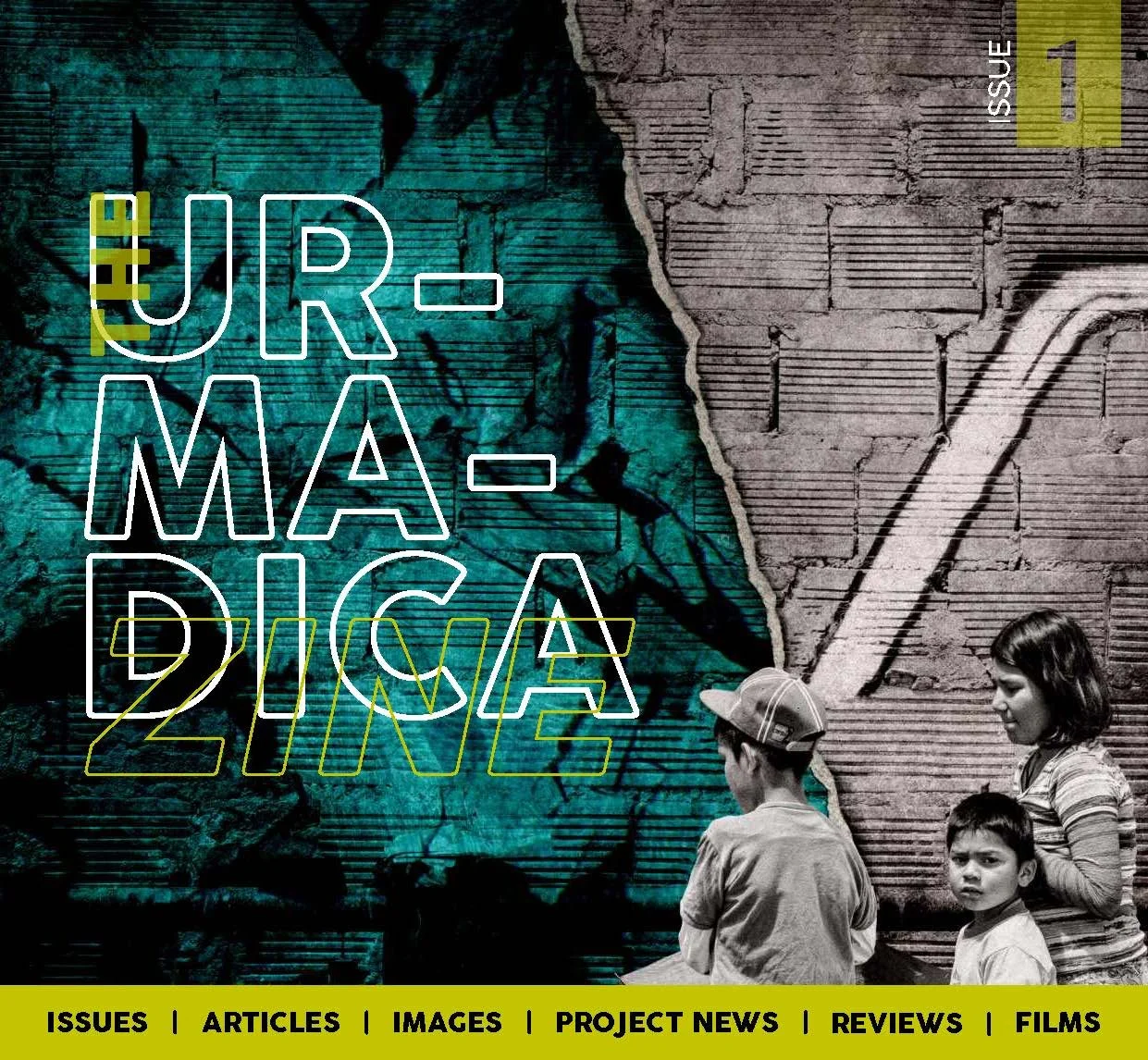
Urmadica is the publication of The Urmadic, a futural education project founded by Fry and an international network of design researchers and practitioners. The project is deliberately placeless and nomadic: it operates without institutional affiliation, without fixed geography, and without the constraints of what Fry identifies as the terminal conditions of post-Enlightenment liberal education. Its editorial policy accepts no uninvited contributions. Every voice in its pages is curated, considered, and invited into a specific intellectual conversation.
Issues 2-4, on which I served as an editorial content collaborator and the only issues I was involved with, are genuinely remarkable documents. Issue #4 opens with Fry's essay 'The Death and the Future Life of the University', a rigorous and unflinching critique of how neoliberal forces have dismantled the conditions for genuine intellectual freedom in higher education, drawing on examples from Denmark to Florida to trace an emergent global pattern. It includes Professor Anne-Marie Willis's 'The Big Leap', which examines the contradictions facing designers who understand they are facilitating unsustainable systems but cannot yet see beyond their own professional formation. It features multilingual contributions from international collaborators, including collective automatic-writing exercises on the lived experience of inbetweenness and borderlands, a photo essay on the lacustrine history of Mexico City as a site of ecological and cultural disruption, and a critical engagement with the role of audiovisual media in shaping or distorting political consciousness.
My editorial role in this project required me to hold all of this simultaneously: to understand each contribution on its own terms, to ensure that the publication as a whole maintained the intellectual and political coherence of the Urmadic parent project, and to make the work accessible to a readership beyond the immediate circle of contributors. This is not copyediting. It is the kind of curatorial editorial judgement that is only possible when the editor genuinely understands what is at stake in the ideas being published.
Returning Arakan and Climate Conflict Design: Futures Made Legible
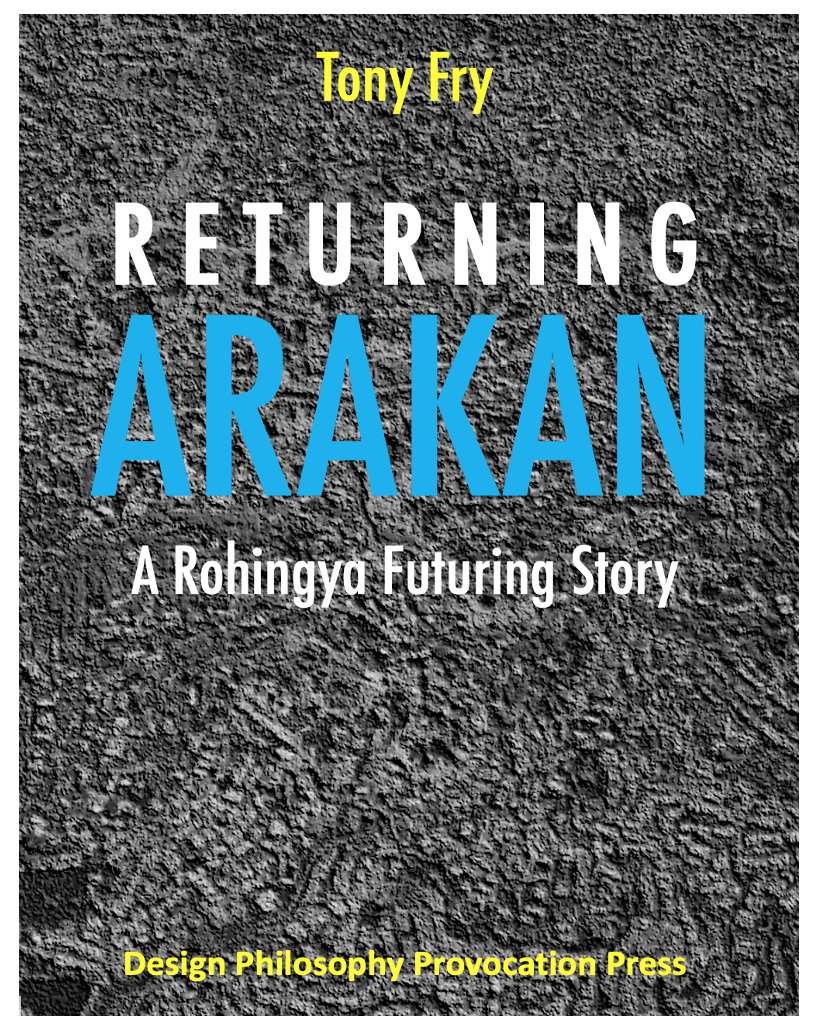
I also served as the primary first-draft editor for Returning Arakan and as a consultant for Climate Conflict Design, two of the manuscripts produced through The Studio at the Edge of the World. These projects represent the applied edge of Fry's theoretical work: they use speculative and futures-oriented narratives to make the consequences of current trajectories legible to practitioners, policymakers, and public audiences. Returning Arakan engages directly with questions of displacement, contested territory, and the politics of return; Climate Conflict Design examines the intersection of climate disruption and geopolitical conflict as a design problem requiring anticipatory rather than reactive response.
My editorial contribution to these manuscripts required me to work with the specific rigour that futures-oriented design and the author demand: ensuring that speculative scenarios were geopolitically plausible, that the theoretical frameworks underpinning the narrative were correctly applied and clearly communicated in-text, and that the language moved between intellectual precision and public accessibility without sacrificing either. This is exactly the work that public sector foresight units, social impact consultancies, and research translation specialists in Melbourne are employed to do, and I have done it at the highest possible level of intellectual demand.
Why This Matters to Melbourne Employers
Melbourne's 2026 design and innovation ecosystem is increasingly defined by the need to engage seriously with exactly the questions that Tony Fry's work raises. The Victorian Government's strategic foresight agenda, the work of organisations like Public Skills Australia and the Office of the Victorian Government Architect, and the social impact focus of consultancies like Paper Giant and Today Strategic Design all operate in the space Fry has been mapping for decades: the intersection of design practice, futures thinking, institutional transformation, and the ethical dimensions of making decisions in conditions of deep uncertainty.
What I bring from this collaboration is not simply a credential or a notable name on a CV. It is a demonstrated capacity to work at the frontier of that space: to take ideas that are genuinely difficult, genuinely urgent, and genuinely unfamiliar to most practitioners, and to make them communicable, actionable, and useful. That capacity, exercised at the level of intellectual rigour that the Urmadic project demands, is rare at any career stage. At mid-level, it is essentially without parallel in the Melbourne market.
If you are considering me for roles in strategic foresight, futures analysis, research translation, or social impact design, this collaboration is the single clearest signal that my theoretical grounding is not decorative. It has been tested in practice, at the highest standard, alongside one of the world's most demanding design thinkers.